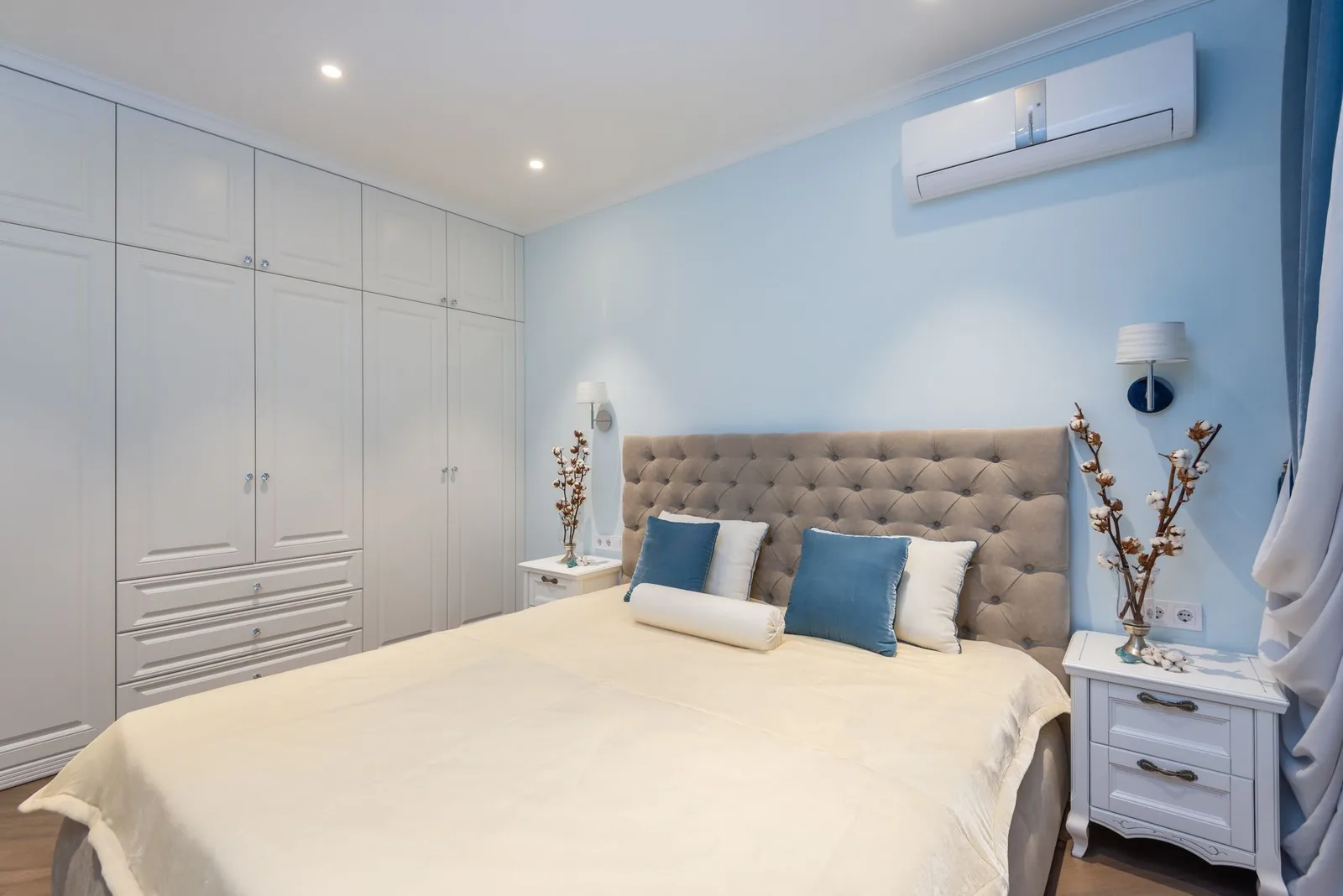
Top Ductless Heat Pump Brand Picks
The best ductless heat pump brands for real homes are Mitsubishi Electric as the best overall pick for most U.S. homes, Fujitsu for cold-climate efficiency, MRCOOL for DIY installation and the Midea/Senville/Pioneer tier for budget options in mild climates.
A ductless mini split is a system that has one outdoor unit and one or more indoor units, and they are connected by a line that carries refrigerant, so it can heat and cool your home without needing ducts. That matters because traditional ducted systems lose about 30% of their energy through ductwork, while mini splits are able to avoid that cost and hassle completely. They also let you control the climate in each room separately, and central air can't do zone for zone. Many of them can handle both heating and cooling, so you might not need separate systems.
Here's the context: the EIA's 2020 RECS covers 123.5 million U.S. homes, and 60% of those homes heat mainly with a furnace, 13% heat mainly with a central heat pump, and 8% heat mainly with a boiler. Another 42% has secondary heating equipment on top of that. Interest in ductless mini splits is growing fast, but you might still be figuring it out as you go. This guide should help cut through the noise.
How We Chose the Best Ductless Heat Pump Brands
Ranking a mini split brand is different from ranking a single model. A brand's warranty support, parts availability, installer network and track record over time might matter just as much as any lab test. We dropped manufacturers that mostly sell window units or central air systems and kept only the ones with real ductless ranges and proven performance in the field.
Performance and Cold-Climate Capability
We liked brands with strong heating capacity retention below 17°F and working ranges to at least 5°F, and ideally down to −13°F to −22°F. Colder regions might need heat pumps with enough low-temperature heating capacity, and cold-weather heating technology can be essential for systems used in freezing climates. Ductless heat pumps are able to maintain heating capacity in extreme cold, with top models retaining over 70% heating capacity at 5°F.
SEER2 is the standard that measures seasonal cooling efficiency for heat pumps, while HSPF2 is the standard that measures seasonal heating efficiency. Both matter, but lab ratings only tell part of the story. We also looked at defrost behavior and low-ambient performance, because a unit that cycles into defrost every 15 minutes at 10°F delivers less real-world comfort than what its rating sheet suggests.
ENERGY STAR standard set minimum specifications for ductless systems, and the NEEP cold-climate specification goes further, needing a COP ≥ 1.75 at 5°F and capacity at 5°F at least 70% of the 47°F rating. It's worth noting that the ducted cold-climate floor from NEEP is lower than the ductless cold-climate floor. The ducted floor is at 7.7 HSPF2 and 14.3 SEER2, so a ductless system that carries the cold-climate label has truly earned it.
Reliability, Parts and Installer Network
Most mini splits use inverter compressors for energy efficiency, and variable-speed inverter compressors can save energy by adjusting to the exact load. But inverter boards and compressors might also be the components most likely to fail. We gave weight to brands with low failure rates in the first five years that are backed by field data, fast North American parts access, and strong contractor networks. Mini splits are hard to service if you do not have brand-specific training, and a 10–12 year warranty means nothing if there is no local person who can actually process it. Most leading ductless brands offer warranties between 10 to 12 years, but the real question is whether you have access to a certified pro in your area.
Support for DIY vs. Pro Installation
We made a clear distinction between brands that actually support DIY installation, with factory-charged quick-connect lines, decent manuals and 115V options. The ones sold online that still need a pro in practice. DIY mini splits do need some electrical and plumbing know-how, and most need a dedicated electrical line. Bad installation wrecks reliability no matter the brand, so we only recommend DIY models where the design itself actually cuts the risk. A typical pro install is going to run you $3,000 to $5,000. That's why DIY might work for you.
Best Ductless Heat Pump Brands Ranked
We are ranking seven brands based on market strength and what actually sets them apart, instead of forcing a top 10. Every brand here is a decent choice, but each one fits a different buyer. Some might need cold climate performance, some might want design, some might want DIY, some might want budget or something in between.
1. Mitsubishi Electric - Best Overall Ductless Heat Pump Brand
Mitsubishi Electric is the brand that leads the ductless mini split market overall. We put them first even though they cost more upfront because no other brand has the same mix of reliability, cold-climate performance and installer support.
Why It Stands Out
Mitsubishi gets cited again and again for long-term reliability. It's often considered the standard in the mini split world. Their Hyper-Heat (H2i) models are able to keep full rated heating capacity below zero. The MSZ-GX24NL, for example, delivers 100% of its 47°F rated heat at 5°F and runs down to −22°F. They also have the largest contractor network in North America, so service and parts are easy to find even ten years after installation. Their inverter compressors adjust output continuously to match heating needs. They do it with low defect rates.
Best For
-
You, if you're in a cold or mixed climate and you want a primary heat source, not just backup for the fall and spring
-
Buyers who are planning to keep the system 15+ years and are willing to pay more upfront for fewer headaches
-
Whole-home multi-zone systems with multiple indoor units where it matters that the units are able to work together
Key Strengths
-
Industry-leading reliability and low failure rates
-
Hyper-Heat models that are certified for use in cold climates down to −22°F
-
Mitsubishi mini-splits have a 12-year warranty for the compressor, if you use a certified contractor
-
Quiet operation on both the indoor units and the outdoor units
-
Massive installer and distributor network
Possible Limitations
-
Higher installed cost, often 30–50% more than the cost of budget competitors
-
Usually pro-install only. It's not a realistic choice for you if you're a DIYer
-
Watch out: Full warranty needs installation by a Diamond-certified contractor
2. Fujitsu - Best Cold-Climate Efficiency
Fujitsu is a last competitor to Mitsubishi with specific strength in cold-climate single-zone and multi-zone systems. If you want to maximize efficiency at low temps, Fujitsu is worth a hard look.
Why It Stands Out
The Fujitsu Altair 500 Series has SEER2 ratings up to 33.7. That's among the highest you'll find in ductless. Their XLTH (Extra Low Temp Heating) line delivers usable heat down to −5°F with strong capacity retention. Many Fujitsu models carry ENERGY STAR cold-climate certifications. Their defrost logic also cuts down on uncomfortable temperature changes during winters that are long and cold.
Best For
-
You, if you are in northern states and looking to replace or really offset a boiler or furnace
-
Buyers who prioritize energy efficiency ratings and lower energy bills over install cost that is rock-bottom
Key Strengths
-
Cold-weather models with high HSPF ratings
-
Fujitsu mini-splits have a warranty of up to 12 years
-
Strong dehumidification performance
-
Has been proven in the contractor community in the Northeast and upper Midwest
Possible Limitations
-
Your installer network is more uneven in parts of the Midwest and Sun Belt
-
Indoor unit design is basic. There are fewer designer options than you get with LG or Samsung
-
Watch out: Confirm your local shop has factory-authorized Fujitsu access before you buy
3. Daikin - Best Versatile Lineup
Daikin is a global HVAC giant with a deep ductless product range that covers both residential projects and small commercial projects. They're the brand to look at when your project might grow past a single room.
Why It Stands Out
Daikin's product range is unmatched in how broad it is: single-zone wall units, multi-zone systems, ducted units and full VRV/VRF solutions for light commercial. Reviews from industry professionals highlight that Daikin's simpler mechanical designs mean fewer failure points. Daikin offers a 12-year warranty on its mini-splits, and their equipment is able to handle complex multi-zone arrangements that other brands struggle with.
Best For
-
Mixed-use properties or larger homes that might expand to multi-zone setups
-
Buyers who want a balanced choice: not the cheapest, not always the top choice for performance, but strong across the board
Key Strengths
-
Broadest product line from single-zone units up to light commercial
-
Global manufacturing presence and support infrastructure
-
Competitive warranties and solid long-term reliability
-
Good fit for installers already in the Daikin system
Possible Limitations
-
Model names can be confusing. It is easy for you to pick the wrong series
-
App and smart controls are less polished than what you get with LG
-
Watch out: Not every Daikin line is cold-climate certified, so verify NEEP listings for your specific match
4. LG - Best Design and Smart Features
LG mini splits are the pick when looks and app control matter as much as performance. Their indoor units look less like equipment and more like something you'd want in a modern living space.
Why It Stands Out
LG's slim, stylish indoor heads stand out on the wall, and that matters when it's mounted somewhere visible. Their ThinQ app system and compatibility with major voice helpers make remote control and scheduling easy. Their top cold-climate line is able to retain heating capacity down to −31°F. That's a spec for a brand that is better known for consumer electronics.
Best For
-
You, if you're design-conscious and care what goes on the wall in a main living area
-
You, if you're a tech-forward buyer who wants reliable remote control, scheduling and energy use insights out of the box
Key Strengths
-
Best-in-class aesthetics among major ductless brands
-
Native Wi-Fi and polished app experience
-
Competitive cold-weather specs in top models
-
Quiet indoor operation
Possible Limitations
-
Installer coverage is heavily concentrated in metro areas. Your rural access can be limited
-
There are fewer large-capacity sizes than you get with Mitsubishi or Daikin
-
Watch out: Verify that your local area has LG-authorized HVAC contractors, not just appliance repair shops
5. Gree - Best Value OEM
Gree is one of the world's largest AC manufacturers and the factory behind many budget brands you've seen online. Going straight to the source can get you good deals and more direct support.
Why It Stands Out
Many other brands source their ductless units from Gree, so buying Gree-branded gets you similar hardware with a warranty path that is more established. Gree/Midea units are budget-friendly and widely available, and some models carry ENERGY STAR and cold-climate certifications at prices well below Japanese top models.
Best For
-
You, if you are budget-conscious and still want a known manufacturer behind your cooling system
-
You, if you're comfortable working with regional sellers or independent HVAC shops
Key Strengths
-
Strong price-to-performance ratio
-
Wide model range from mild-climate AC up to cold-climate heat pump
-
There is massive OEM experience and scale in global manufacturing
-
Decent cold-climate offerings in higher-tier lines
Possible Limitations
-
Brand recognition and support can vary by region
-
Your user-facing documentation and apps feel less polished than what you get with premium brands
-
Watch out: Warranty claims may need shipping parts from sellers overseas in some areas
6. MRCOOL - Best DIY Ductless Heat Pump
MRCOOL is built for homeowner-installed ductless systems. If you're a capable DIYer, this is where you should focus.
Why It Stands Out
MRCOOL's factory-charged quick-connect line sets allow DIY installation without handling refrigerant-a game-changer for installation costs. Their DIY 5th Gen 12K 115V model (DIY-12-HP-C-115D25-O) is rated 23.5 SEER2, 12.5 EER2, and 10.2 HSPF2. It runs on a standard 115V outlet, which means most homeowners avoid a panel upgrade. For cold climates, a DIY Hyper Heat with quick-connect lines exists: MRCOOL's DIYHH-12-HP-C-230D25-O runs on 208/230V, is rated 23.5 SEER2, and heats down to −22°F. Note that the only 230V 12K in the DIY line is that Hyper Heat model.
Best For
-
Confident DIYers with basic electrical and carpentry skills who want to cut the cost of labor
-
Detached garages, bonus rooms and outbuildings where running new ductwork would be too much
Key Strengths
-
True DIY-friendly design with quick-connect lines and precharged refrigerant
-
Solid energy efficient specs for the price point
-
There is wide online availability and growing community support
-
115V options that help you avoid electrical panel upgrades on smaller models
Possible Limitations
-
Support and warranty process is more limited than what you get with premium pro-only brands
-
Are there fewer local pros excited to service DIY systems?
-
Watch out: Install quality still depends heavily on you. Mistakes in the refrigerant line connections, electrical or mounting can wipe out the value you get. Proper installation affects the lifespan of mini-splits no matter what brand it is.
7. Midea / Senville / Pioneer Tier - Best Budget Ductless Brands
Think of this as a value group: several lines that are rebadged and share similar hardware from the same factories, all focused on the lowest upfront cost.
Why They Stand Out
Brands like Senville and Pioneer often use Midea or Gree manufacturing, delivering decent specs at aggressive prices. Some are sold to you through big-box stores and online marketplaces, so they are easy to find and buy. Mirage mini-splits, another entry in this tier, can run on a standard 115V outlet. That brings the barrier down even further.
Best For
-
You, if you mainly want summer air conditioning plus shoulder-season heat, not a full furnace replacement
-
Buyers willing to treat the unit as semi-disposable, acceptable on a 7–10 year timeline
Key Strengths
-
There is the lowest upfront cost in the ductless market
-
Decent efficiency on paper in mild to moderate climates
-
Broad online availability through major retailers
-
Acceptable performance for single-zone, single-room applications
Possible Limitations
-
Inconsistent installer support. Many HVAC pros are reluctant to service budget brands that you supplied yourself
-
Warranty processes can be slower and involve more paperwork
-
Watch out: Cold-climate capacity retention often drops fast compared to what the spec sheet implies. Verify NEEP listings before you expect these units to serve as primary heat in a cold house.
Quick Comparison of the Best Ductless Heat Pump Brands
This section is a fast way to match brands to use cases, not a full spec sheet. Here's how we'd sort the field:
-
Mitsubishi Electric is best all-around for reliability and whole-home, cold-climate systems
-
Fujitsu is best for maximizing cold-climate efficiency and performance at low temperatures
-
Daikin is best for complex multi-zone or mixed residential/light-commercial projects
-
LG is best for stylish indoor units and robust built-in smart-home features
-
Gree is best value from a major OEM for pro-installed systems
-
MRCOOL is best for true DIY ductless heat pump installation
-
Midea / Senville / Pioneer tier is best for tight budgets in mild or moderate climates
How to Choose the Right Ductless Heat Pump Brand
Pick by Climate and Heating Role
Whether you're using a ductless system as your main heat source or just to supplement a furnace or boiler changes everything. If you're in a cold climate and want one or more indoor units to carry the full heating load, Mitsubishi, Fujitsu or Daikin's cold-climate lines are the right direction. For supplemental cooling or mild-climate use, value and DIY brands work fine.
Heat pump use varies a lot by state. RECS 2020 is showing central heat pumps as the main heat in 39% of Alabama homes and 31% of Florida homes, but only 2% in Illinois and Massachusetts. If you're in a state where heat pumps aren't common yet, prioritize cold-climate certifications and heating capacity at low temps. Sizing a mini split is something that takes precise calculations. Oversizing wastes energy, and undersizing leaves you cold.
Pick by Install Path
A pro install makes the most sense for multi-zone systems, panel upgrades, historic homes and areas with strict codes. Only a few brands, mainly MRCOOL, are truly built for DIY. Other brands sold online still realistically need a pro with refrigerant handling certification. Installation quality has a big effect on reliability and how long ductless systems last, so the trade-off between saving on labor and ensuring long-term performance is real.
Choose Based on Budget and Long-Term Plans
Premium brands cost more upfront but generally last longer and are cheaper to service. Budget brands make sense for shorter timelines, rentals or a single room where replacing every decade is fine. You'll want to factor in rebates, operating cost savings and how long you plan to stay in the home, not just the equipment price. When they're sized and installed right, mini splits can save serious money over central air conditioning in the long run.
Which Ductless Heat Pump Brand Is Best for You?
There's no single winner for every home. The best mini split brand depends on your priorities, your climate and whether you're willing to install it yourself or hire a pro. Here are direct recommendations:
-
Choose Mitsubishi Electric if you want the safest long-term bet for a primary heating and cooling system
-
Choose Fujitsu if you're in a very cold climate and care most about heating efficiency at low ambient temperatures
-
Choose Daikin if you're planning a complex multi-zone or mixed residential/light-commercial setup
-
Choose LG if aesthetics and integrated smart control are at the top of your list
-
Choose Gree if you want solid performance at a lower price from a major OEM
-
Choose MRCOOL if you are a capable DIYer determined to install the ductless system yourself
-
Choose a Midea / Senville / Pioneer–type brand if you need the lowest upfront price and can live with weaker support
Final Thoughts
Brand choice sets the ceiling for what your mini split can deliver in reliability, efficiency and support. But installation quality is the floor. Proper sizing and installation dictate nearly 80% of a ductless system's reliability, meaning even the best brand fails when the install is sloppy.
For you, if you can afford it, a premium brand with a solid local installer is the best long-term value. Mitsubishi units, Fujitsu's cold-climate line and Daikin's product range all pay you back on that investment over 10–15 years.
Here's your practical takeaway: decide your role (primary vs. supplemental heat), pick your install path (DIY vs. pro), then narrow to two or three brands from this list. Get specific model recommendations, verify NEEP cold-climate listings for your area, and collect at least two quotes from certified installers. That process, not going after the lowest price on a random model, is how you end up with a ductless system that actually performs for the life of your home.