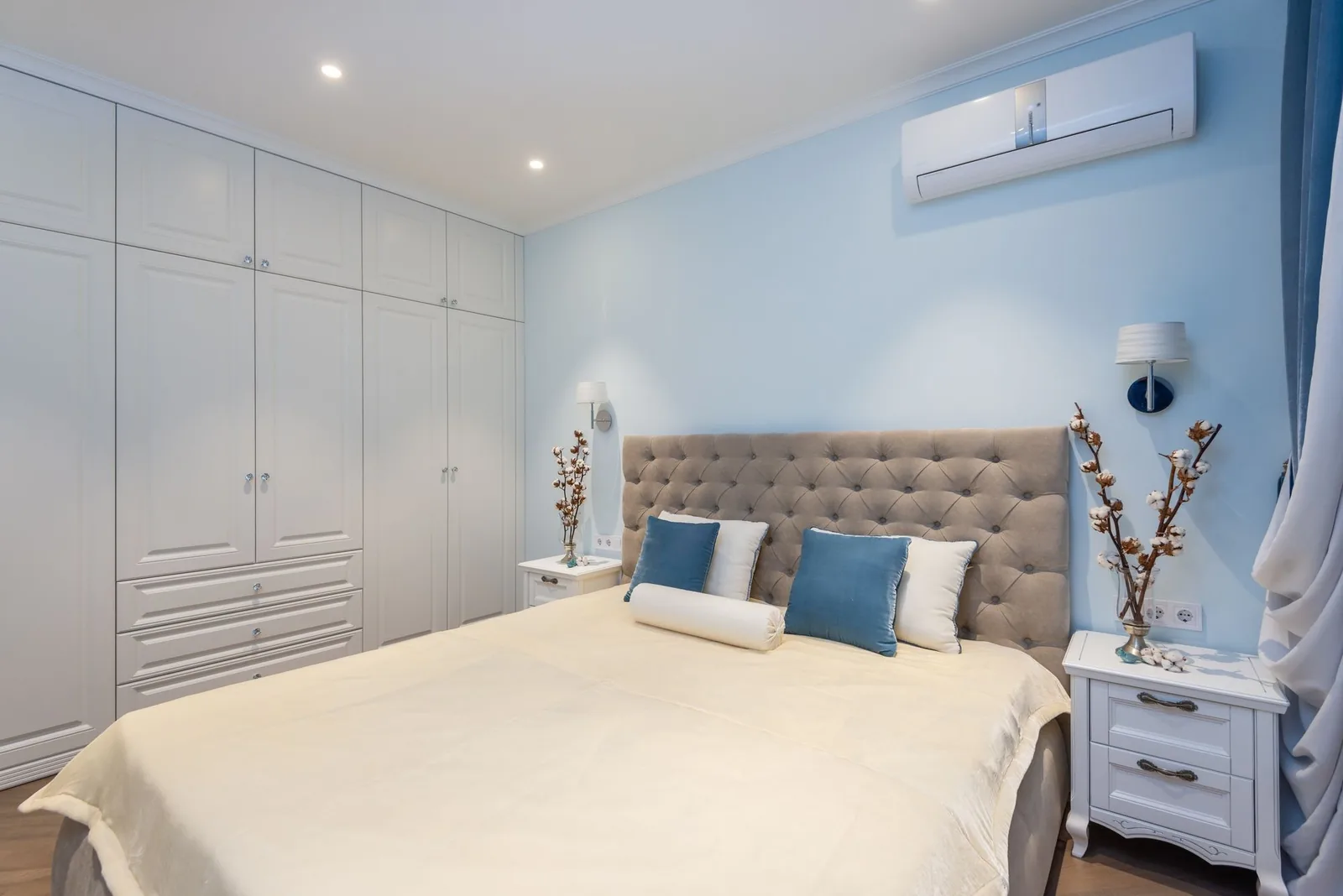
Best 115V Mini Split Brands in 2026
We'll cut straight to it. These are the best 115V mini split brands in 2026, ranked by who they serve best:
-
Zone Air might be the best overall choice for true plug-in DIY installs on a budget.
-
MRCOOL DIY 5th Gen is best for high-efficiency 115V systems when you can wire a 20A circuit.
-
Senville is the best low-cost 115V option when a pro handles the start-up.
-
Mirage / regional brands are the best 115V choice for hot-climate, cooling-first projects.
-
Mitsubishi, Daikin or Fujitsu - best when you need premium reliability but are locked into 115V
Why does 115V matter? Because 115V mini split systems are designed for standard household circuits. These are the same circuits that power your lamps and kitchen outlets. If you're conditioning a garage, bonus room, basement apartment or older home where pulling a 230V line means an expensive panel upgrade, a 115V mini split air conditioner lets you skip that hassle completely. Most 115V mini splits need a dedicated 15-amp or 20-amp circuit, and that is far simpler and cheaper to add than a double-pole 230V breaker.
The trade-off is capacity. Most 115V mini split systems usually have capacities of 9,000 to 12,000 BTU, and that covers about one room to a small open area. Many brands make 115V mini split systems for smaller spaces, and availability of 115V models may vary by brand and capacity. You won't find a 36,000 BTU multi-zone system running on 115V because physics and amperage won't allow it. So this is not a general "best mini split brand" list. You might think of this as a guide that is built around the specific limits and advantages of standard-voltage equipment.
We are writing this in late 2026, and things are moving fast. New refrigerant rules have come out, and there are updated SEER2 efficiency standards, and product lines keep shifting. Because of all this, some 115V models that were available six months ago are already gone. Everything here reflects current code, current refrigerant regulations and real-world ownership and installation experience. This is not just spec sheets that the manufacturer published.
How we picked the best 115V mini split brands
Our evaluation criteria
-
Electrical fit and true 115V support - Does the brand offer properly engineered 115V models with clear specs on breaker size, wire gauge and whether it is plug-in or hard-wire? A brand that buries its voltage requirements in small print lost points.
-
Performance and efficiency - SEER2, EER2, HSPF2 and cold-weather heating output. SEER2 ratings usually range from 17 to 23 for 115V systems, and SEER2 ratings above 17 are generally considered efficient. Higher SEER2 ratings mean lower electricity bills over the life of the unit. Our standard for "excellent" in this class: MRCOOL's DIY 5th Gen 12K 115V model (DIY-12-HP-C-115D25-O) hits 23.5 SEER2, 12.5 EER2, and 10.2 HSPF2. SEER2 replaced SEER in January 2023, and it dropped efficiency ratings across the board, so do not compare old SEER numbers to current SEER2 numbers directly.
-
DIY ease vs. pro-only - Pre charged refrigerant lines, quick-connect fittings and self-check diagnostic modes all matter. Under ENERGY STAR's optional installation-capability standard, mini splits need at least two self-check features such as refrigerant charge self-verification or an installer test mode. If you buy a brand that includes these, it's easier to catch mistakes. Energy Star certified mini splits use up to 60% less energy than traditional hvac systems, so that certification is worth checking.
-
Reliability and support - Warranty length, parts availability, contractor network depth and real owner feedback. Fancy brochures mean nothing if the warranty process is a mess.
-
Regulatory and refrigerant future-proofing - Is the 115V line still R-410A or has it moved to lower-GWP A2L refrigerants like R-454B? EPA's May 2026 Technology Transitions rule removed the January 1, 2026 installation cutoff for R-410A split systems whose components were made or brought in before January 1, 2025, so that stock can still be installed. But "can be installed" and "should be your first choice" are different questions.
Best 115V mini split brands for most people
1. Zone Air - best 115V brand for plug-in DIY installs
Zone Air is recognized as the best value DIY mini split brand in the 115V space right now. It builds its entire product range around 115V plug-in operation with pre-charged linesets, so it has the lowest total installed cost for a single room if you are comfortable with basic DIY installation. Some 115V mini splits are sold as DIY-friendly with quick-connect features, and Zone Air takes that concept further than most.
Why it stands out
Zone Air's 115V wall mount units run on standard 15A dedicated circuits. These are the kind already in most rooms of your house. Zone Air offers true plug-and-play DIY mini splits, and Zone Air's 115V models can plug into standard outlets, so you don't need an electrician in many scenarios. The pre-charged line sets don't need a vacuum pump. The wall brackets are simple.
Where it tends to beat MRCOOL DIY at 115V: simpler electrical path and fewer surprises for garages, bonus rooms and finished attics where you do not want to pull new wire.
Best for
-
Homeowners who are adding a single zone of 9,000–12,000 BTU to a bedroom, office or small shop. A 9,000 BTU unit works for spaces up to 400 square feet.
-
You have basic carpentry skills. You're comfortable drilling, hanging and sealing penetrations. You don't want to touch refrigerant line work or hire an electrician.
Key strengths
-
True plug-in 115V operation on a dedicated outlet, with no hard-wiring needed
-
Pre-charged R-454B linesets are ready to connect when they ship
-
The 9K model is rated around 23.0 SEER2 with heating down to -13°F
-
Pricing is around $1,899–$1,999 for a complete DIY kit
-
Fast total project times when you don't need a new breaker or subpanel
Possible limitations
-
BTU and line length limits are real. It is not ideal for large open-plan spaces or rooms with high ceilings where the air conditioning demand goes above 12,000 BTU.
-
Warranty and support processes may feel less polished than big premium brands. Some areas don't have third-party service that knows this mini split brand.
-
Being a newer name, the contractor network is thinner than other established brands.
2. MRCOOL DIY 5th Gen - best 115V brand for modular DIY
MRCOOL sells its diy mini splits through dealers and retailers. Their 115V presence sits in the 9K and 12K sizes of the DIY 5th Gen line. We've spent considerable time with their electrical specs and real-world install requirements, and the numbers hold up. But the "DIY" label is something that comes with important warnings.
Why it stands out
MRCOOL DIY 5th Gen 9K and 12K units are 115V but hard-wired. They call for a 20A breaker and at least 12-2 wire. This is not plug-and-play. It's a dedicated circuit that an electrician usually runs. But that 20A edge provides more electrical stability than plugging into a weak 15A outlet.
MRCOOL DIY models include pre charged refrigerant lines with quick-connect fittings, a broad accessory range with line-hide kits, Wi-Fi and smart home integration with Google Home and similar platforms, plus solid documentation.
The efficiency on the MRCOOL DIY 5th Gen 12K 115V model (DIY-12-HP-C-115D25-O) is very high for a 115V diy mini split: 23.5 SEER2, 12.5 EER2, and 10.2 HSPF2. A 12,000 BTU unit is suitable for spaces up to 550 square feet.
Best for
-
Homeowners who are comfortable pulling a new 20A 115V circuit or hiring an electrician for the electrical work, but who want to handle the refrigerant side themselves
-
If you plan to add more MRCOOL zones over time and want to stay within one brand's system, this is the option for you.
Key strengths
-
Highest SEER2/HSPF2 combination we've seen in a 115V DIY system
-
Wide retail distribution at big box stores and online
-
20A/12-2 wiring provides more stability for 115V loads than a shared 15A circuit
-
Cold-climate certified: the 12K delivers about 8,400 BTU/h at 5°F, a big jump over older models
-
MRCOOL's wider line includes 230V sizes (the 18K is 230V/20A, 24K 25A on 10-2 and 36K 35A on 8-2), so you can mix 115V and 230V within the same brand if you expand later. The only 230V 12K in the DIY line is the Hyper Heat
Possible limitations
-
"DIY" does not eliminate the need for proper electrical work and condensate routing. Mistakes are common with first-timers, and an oversized unit short cycles, wasting energy and shortening compressor life. Getting the size right for mini split systems is vital for effective operation.
-
MRCOOL's Trustpilot profile stood at 3.2 out of 5 across 89 reviews in September 2026, split about 45% five-star and 47% one-star. Experiences are split. They are great when installs go well, and frustrating when they don't.
-
MRCOOL's DIY models often need a 230V dedicated circuit for anything above 12K, so 115V coverage is capacity-limited. If you need to cool several rooms or a whole house system, you'll outgrow 115V fast.
3. Senville - best budget 115V brand for pro or assisted DIY
Senville sits in the value tier of the 115V mini split market. Their 9K–12K inverter units show up on Amazon, eBay and direct channels at prices that beat premium DIY models by 30–40%. Inverter technology helps adjust compressor speed for energy savings, and Senville's product range uses it across the board.
Why it stands out
Aggressive pricing is the main draw. The Senville SENL-09CD-OL, a 9,000 BTU heat pump rated at about 21.5 SEER2 and 12.5 EER2, costs a lot less than similar MRCOOL or Zone Air kits. For secondary spaces where you want energy efficient air conditioning without a premium price tag, that makes sense.
Best for
-
Budget-minded homeowners who can bring in a local HVAC tech for final checks, start-up and charge verification
-
Secondary spaces like workshops, guest rooms and detached offices where absolute top-tier reliability is less critical than keeping costs low
Key strengths
-
Lowest upfront price on 115V inverter mini split systems compared to Mitsubishi, Daikin or even MRCOOL
-
Wide online availability with frequent sales and package options including line set plus wall bracket and accessories
-
Acceptable efficiency for moderate climates and normal run hours
-
Many units are good as supplemental cooling alongside central air conditioning or central ac
Possible limitations
-
Professional installation may be needed for warranty activation on some brands, and Senville's warranty usually needs licensed installer paperwork. DIY installs may reduce or void coverage.
-
Less consistent contractor familiarity. Some techs completely refuse to work on owner-supplied Senville units.
-
Cold-climate performance trails premium brands. A real-world review of the Senville LETO 12K showed two good summers followed by outdoor condenser coil failure and a refrigerant leak. Repairs were getting close to the cost of replacement. Budget units demand more diligent maintenance.
-
Parts and documentation can be thinner than established other manufacturers.
4. Mirage / similar regional 115V brands - best 115V mini splits for hot, dry climates
Mirage and similar regional brands focus on cooling-first 115V mini splits. They are popular across the Southwest and border states. If you live where outside air hits 115°F and your garage needs cooling more than your house needs heat, these brands can fill a real gap.
Why it stands out
Accessible 115V models in smaller sizes that don't need panel upgrades for garages and casitas. Performance is tuned for high ambient cooling rather than deep-cold heating. That is a different axis than the cold-climate brands above.
Best for
-
If you're in a hot, dry climate and mainly need cooling for garages, workshops or additions-one room at a time
-
Projects where heat is handled by another system such as a gas furnace or electric baseboard and the 115V mini split serves as cooling-only or light heat
Key strengths
-
Good cooling capacity per amp at 115V for sun-baked room features
-
Attractive installed cost compared to upgrading panel and running 230V circuits
-
Simple, conventional controls that many units of this type share. Most installers are comfortable with
Possible limitations
-
Limited low-temperature heating capability. Many do fall off hard below about 40–60°F. These are not cold climates machines.
-
Regional dealer networks mean support can be thin outside core markets in the Southwest.
-
Fewer smart home integration features such as Google Home app control, with limited Wi-Fi on some models.
5. Premium brands' 115V edge cases - when to consider Mitsubishi, Daikin or Fujitsu at 115V
Most premium Japanese brands focus on 230V across their product ranges. But a few 115V SKUs and paired indoor unit options exist for niche situations, and they're worth knowing about if you value reliability above all else.
Why they are on the list
Even when 115V options are sparse, premium brands deliver what budget brands can't: proven long-term reliability, deep parts support and cold-climate performance that actually holds up. These are strictly professional installation territory, and total installed cost runs a lot higher, but for homeowners committed to staying at 115V for structural or code reasons, they are the safest long-term bet.
Mitsubishi Electric offers the JP Series wall-mounted heads in 115V single zone configurations. Mitsubishi is ranked as the most reliable mini split brand in 2026, and Mitsubishi and Fujitsu provide 12-year compressor warranties when registered.
Fujitsu has some of the best cooling capabilities on average. Their entry-tier 115V wall-mount models are rated for heating down to about 15°F. The Fujitsu Altair 500 Series has SEER2 ratings between 21 and 26, and Fujitsu consistently ranks high for reliability among mini split brands.
Daikin is known for its strong multi-zone capabilities and offers strong reliability and efficiency ratings, though current 115V single zone systems are increasingly rare in their premium tiers. The Mitsubishi MSZ-FS has the highest SEER2 rating at 18–20 among premium 115V wall mounts.
Best for
-
Homeowners who insist on a top-tier brand but are limited to 115V service. Older panel, condo rules or local building codes can make 230V impractical.
-
Buyers who are planning 15+ years in the home and value long warranties and robust service networks over upfront savings
Key strengths
-
Class-leading reliability and low failure rates based on contractor data and consumer reports for you
-
Excellent dehumidification and modulation compared with most budget 115V competitors. They handle high humidity well.
-
Mitsubishi units and Fujitsu models work with ceiling cassettes and other indoor unit styles in 230V lines, so you can mix if you eventually expand to central systems
-
LG mini splits have high average SEER2 ratings for energy efficiency and are worth a look as an adjacent option, though their 115V choice is similarly limited
Possible limitations
-
Very limited model and size mini split choice at 115V. Many projects still need 230V circuits to use these brands fully.
-
Higher installed cost. Overkill for light-use spaces like a hobby room or occasional guest suite.
-
Midea is the largest manufacturer of mini splits in the world and OEMs for many brands. Premium pricing reflects brand reputation and support infrastructure, not necessarily different underlying hardware in every case.
Quick comparison of the best 115V mini split brands
Here's the fast reference for who each brand serves best:
-
Zone Air. Best for true plug-in DIY 115V installs on a budget. Single rooms, garages, home offices. Runs on a 15A dedicated outlet.
-
MRCOOL DIY 5th Gen. Best for high-efficiency 115V DIY systems when you can add a 20A circuit and hard-wire. It has the best SEER2 numbers in the 115V class.
-
Senville. Best low-cost 115V option when you can involve a pro for startup, sizing and warranty paperwork. Great for secondary spaces.
-
Mirage / regional brands. Best 115V choice for hot-climate, cooling-first projects where heating barely matters.
-
Premium 115V offerings (Mitsubishi/Daikin/Fujitsu). Best for long-term reliability when you are locked into 115V and using a pro installer with a strong contractor network.
How to choose a 115V mini split brand
Check your electrical panel and circuit limits first
Before shopping, open your panel and count spare breaker spaces. An older 100A panel may have one or two open slots and barely enough headroom for a new 20A circuit. A newer 200A panel usually has room to spare.
The difference between plug-in 115V units from Zone Air and hard-wired 115V systems like MRCOOL that need a 20A breaker and 12-2 wiring directly affects which brands work for you. If you have no spare 20A slot, Zone Air's 15A plug-in path gets around the issue. If you can add a circuit, MRCOOL's hard-wired approach gives you more electrical stability and higher efficiency.
DIY mini splits usually cost $1,900 to $3,000 installed when you handle the mounting yourself, but that range assumes you don't need a major panel upgrade. If adding a 230V circuit means a $2,000–$4,000 service upgrade, the math on 115V makes even more sense. Replacing window units or window ac with a ductless system on existing circuits is often the most cost-effective path.
Choose based on climate and heating expectations
Climate zone dictates which 115V brands you should trust. In mild climates (Zones 1–3), budget 115V single zone systems from Senville or Zone Air handle both cooling and light heating without drama. In cold climates (Zones 5–7), most DIY brands operate efficiently only down to 5°F, and capacity drops a lot below that.
For serious cold-weather heating, premium brands pull ahead on a completely different axis. Mitsubishi Hyper-Heat maintains 100 percent full capacity down to 5°F. Daikin Aurora is able to provide continuous heating to -13°F. Fujitsu Halcyon Extra Low Temperature operates down to -15°F. Bosch IDS Plus is rated for continuous heating to -4°F. But most of these are 230V models.
If you're in a cold climate and need a heat pump as primary heat for one room, consider whether a 230V hyper-heat model makes more sense for that space, even if you use 115V elsewhere. Many 115V models are cooling-first and may not maintain full heating capacity below freezing. A ductless system that can't keep up at 10°F isn't saving you money if you are running an electric space heater alongside it.
Choose based on DIY vs. professional installation
The DIY spectrum for 115V mini split brands ranges from basically plug it in with Zone Air to you still need an electrician and maybe a permit with MRCOOL hard-wire or Senville with pro startup. Premium Japanese brands like Mitsubishi Electric, Fujitsu and Daikin are strictly professional installation with hvac equipment expertise required.
Even with diy models, "DIY" doesn't cover everything. You still need correct condensate routing, proper wall penetration sealing and compliance with local building codes. Many jurisdictions require permits for any fixed HVAC installation regardless of voltage.
Choose based on refrigerant and future regulations
The R-410A phase-down is real and speeding up. Newer 115V lines from MRCOOL (5th Gen) and Zone Air ship with R-454B, which has a Global Warming Potential of about 470 compared to R-410A's about 2,088. That can matter for long-term serviceability: as R-410A becomes harder to find, topping off or repairing an older outdoor unit gets more expensive.
EPA's May 2026 Technology Transitions reconsideration rule removed the January 1, 2026 installation deadline for R-410A split systems whose components were made or brought in before January 1, 2025, so that stock can still be installed legally. This means discounted R-410A 115V units are floating around at distributors and online. A discounted R-410A unit makes sense if you're conditioning a low-use space like a seasonal workshop or guest room where you won't need major service for years. But for a primary-use room where you'll run the system daily, paying more for an R-454B unit gives you better long-term compatibility and easier serviceability.
R-454B is an A2L "mildly flammable" refrigerant, which brings its own installation rules: minimum indoor unit mounting height, minimum room area and sometimes leak detection sensors. Check your local code-and check the installation manual before you buy.
Which 115V mini split brand is best for you?
Here's the verdict, lined up with your priorities:
-
You'd want to choose Zone Air if you want the simplest plug-in 115V DIY install and lowest total project cost for one room. No electrician, no vacuum pump, no licensing headaches.
-
Choose MRCOOL DIY 5th Gen 115V if you are comfortable adding a 20A circuit and want the highest energy efficiency plus a robust DIY accessory system with parts and documentation.
-
Choose Senville if your top priority is low equipment cost and you can get a local pro to handle charging, testing and warranty paperwork. Best for supplemental spaces where you're not relying on it as primary heat.
-
Choose Mirage or a similar regional brand if you're in a hot climate and mainly need cooling on an existing 115V branch. Don't expect much from the heating side.
-
Choose a premium brand's 115V option (Mitsubishi, Fujitsu or Daikin where available) if you're staying in the home long term, care most about reliability and professional service, and can absorb the higher installed cost. These also handle multiple indoor units better if you eventually go 230V multi-zone.
One honest note: if your electrical panel can easily support 230V-spare double-pole breaker space, short wire run, no panel upgrade needed-some readers will be better off expanding their search beyond 115V brands completely. Do you need more size options? The 230V market is wider, more competitive and offers more size mini split options. Don't limit yourself to 115V out of habit when central systems or larger ductless options are within reach.
Final thoughts
Whatever you choose, verify your breaker panel capacity, confirm the refrigerant type and check whether your local code requires permits for fixed hvac equipment installation. A 115V mini split can transform a hot garage or freezing bonus room for under $3,000-but only if the brand, the circuit and the install all line up.