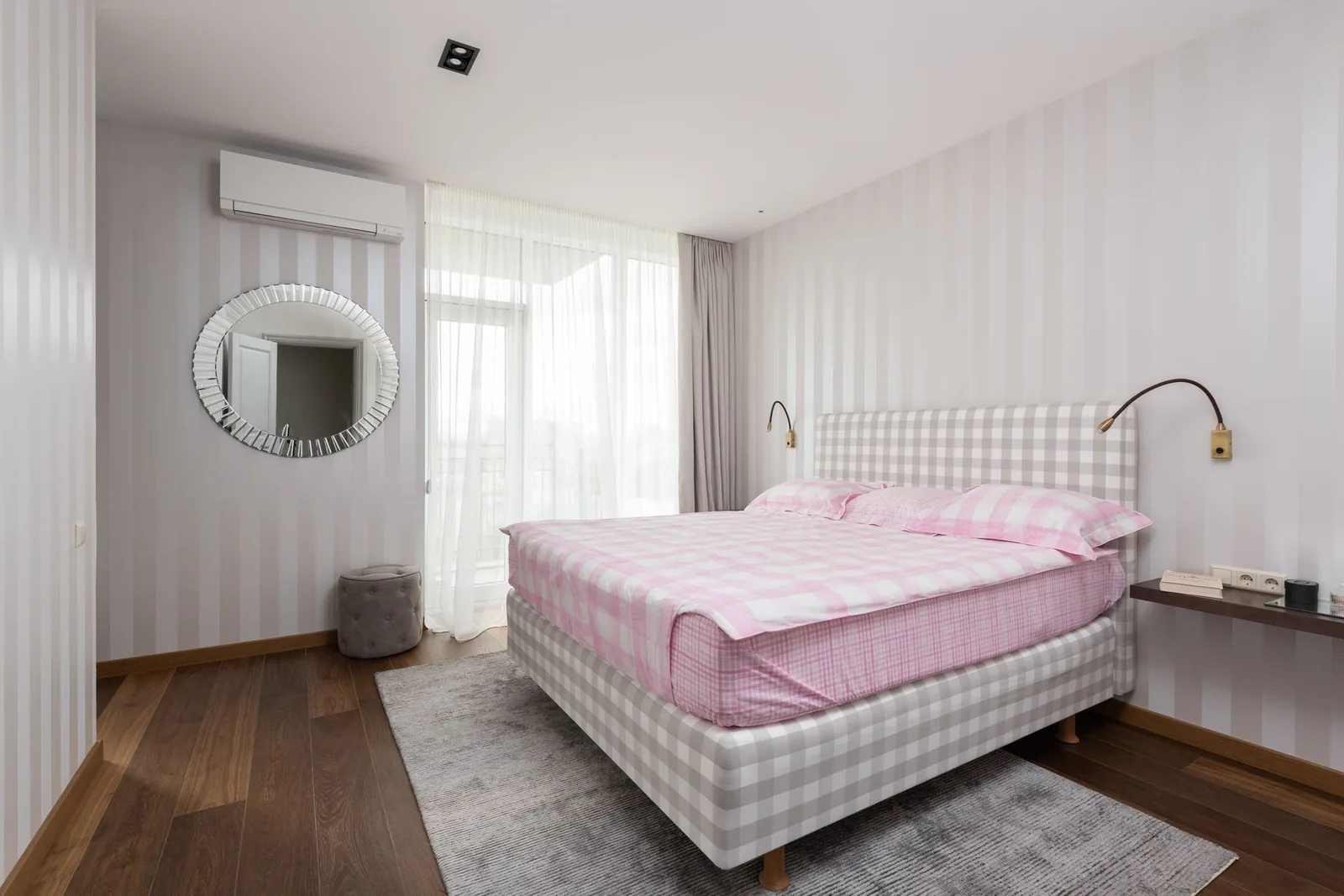
The quietest mini split brands, ranked
The quietest mini split brands for 2026 start with Mitsubishi Electric as the quietest all-around pick for bedrooms. Fujitsu, Daikin and LG could come next for rooms where noise matters, while Midea and Gree might lead the value tier. MRCOOL is the quietest choice among true DIY mini split systems you can put in yourself. That's the short answer, and below we break down every brand with real dB numbers, things to watch out for, and who each one fits best.
More than 40% of new HVAC installations in North America now use mini splits, and that shift means more homeowners are shopping on noise specs for the first time. Indoor noise levels on ductless systems can range from 18 to 25 dBA depending on brand, model and fan speed. The top brands have units that run between 18 and 22 dB on low settings. We put brands in order based on real-world indoor and outdoor dB ratings plus how consistently quiet they stay at low fan speeds, not on marketing claims or "up to" numbers. On bestminisplitbrands.com we match specific brands to specific jobs, and here the job is quiet operation first with everything else second.
How we picked the quietest mini split brands
Core evaluation criteria
-
Measured noise levels (dB(A)). We focused on indoor wall-mount heads at low and "quiet" fan speeds, plus outdoor units at typical 50-60% load. For reference, 20 dBA is about the same as leaves moving or a quiet studio. The lowest indoor sound ratings can change by model and operating conditions, so we looked at ranges across each brand's whole range rather than cherry-picking a single spec.
-
Energy efficiency. High SEER ratings mean better energy efficiency in air conditioners, and higher efficiency generally goes with quieter, lower-speed operation. Split-system heat pumps made on or after January 1, 2023 must reach at least 14.3 SEER2 and 7.5 HSPF2 across the country, and the quiet brands we selected beat those floors comfortably. Mini splits avoid the 20-30% energy loss that's typical of ducted systems, so they can run at lower output and lower noise to get the same comfort.
-
Reliability and warranty support. Quieter hardware only matters if it is going to last. Premium brands usually offer 10-12 year compressor warranties, while some value brands offer less.
-
Installation issues. Materials that absorb vibration can get rid of mechanical noise in mini splits, but only if the installer uses them. Proper installation and sizing can help your system run quietly, and we noted whether brands give you installer test modes and self-checks. Under ENERGY STAR's optional installation-capability criteria, mini splits and multi-splits need at least two self-check features such as refrigerant charge self-verification or an installer test mode.
7 quietest mini split brands for 2026
1. Mitsubishi Electric - quietest for bedrooms
Mitsubishi indoor heads regularly hit 19 dB(A) in quiet mode. Some units go as low as 17 dB. The outdoor units stay quiet under typical part-load operation, so this is our top pick when you want quiet plus long-term reliability.
Why it stands out
Mitsubishi's popular wall-mount series (FH, FS, GL lines) post indoor sound ratings in the 19-22 dB(A) range on low fan. Quieter indoor units usually feature minimum sound ratings of 19 to 23 dB, and Mitsubishi consistently hits the bottom of that range. Indoor units can operate as low as 19 dB for quiet operation across multiple capacities. The inverter control is smooth enough that compressor ramp-up "roar" at night is nearly gone. Mitsubishi is the most reliable mini split brand in 2026 based on installer feedback and service-call data we track. Their Hyper-Heat lines keep cold climate ratings strong, delivering serious heat output well below freezing without the noisy full-speed cycling that cheaper systems fall into.
Best for
-
Homeowners who prioritize whisper-quiet bedrooms or kids' rooms and are willing to pay a premium installed cost.
-
If you live in a mixed or cold climate and need both quiet cooling and serious heat from a single zone or multi zone mini split.
Key strengths
-
Indoor sound ratings that lead the industry in quiet and low fan modes.
-
Very low vibration and hum transmission when the unit is mounted properly.
-
Top-tier efficiency that usually goes past ENERGY STAR limits, keeping part-load operation extra quiet.
Possible limitations
-
Higher installed cost than most competitors. Strongly oriented to professional installation.
-
True DIY is not realistic with Mitsubishi units, and noise performance depends on a good contractor following factory mounting details.
2. Fujitsu - best for ultra-quiet and reliability combined
Fujitsu's better lines match or beat Mitsubishi on quiet operation in many sizes, with a reputation for low service-call rates that makes them a fine choice for long-term ownership.
Why it stands out
Fujitsu units can operate at noise levels as low as 19 dB. The Halcyon RLS3H in the 9k BTU class puts out about 19-20 dB(A) on lowest fan speed. Consistent compressor sound isolation and cabinet design reduce high-pitched fan noise that you might find more annoying than a low hum when you're sleeping. Fujitsu also handles humidity control well at low fan speed, so you avoid noisy on/off fan cycling in humid climates. Their XLTH cold-climate line operates down to -15°F with strong capacity retention.
Best for
-
Long-term owners who want quiet plus very low failure rates.
-
Noise-sensitive offices, therapy rooms or studios where you cannot stand fan "whoosh" during calls or recordings.
Key strengths
-
Fujitsu units operate as low as 19 dB for quiet operation across many capacities.
-
Strong warranties: compressor coverage usually up to 12 years with proper registration.
-
Solid performance in both humid and cold climates, so it stays quiet across seasons.
Possible limitations
-
Less common dealer network than Mitsubishi or Daikin in some regions. That can affect who installs and services the equipment.
-
Control interface and apps can feel less polished than some design-driven competitors.
3. Daikin - quiet, efficient and stable in tough climates
Daikin focuses on inverter control and stable part-load operation, keeping indoor sound levels low even in hot, humid or cold conditions.
Why it stands out
The Daikin Emura 9k indoor unit runs as low as 19 dB(A) on SL ("super quiet") fan speed, with the condenser unit at about 46 dB(A) in cooling mode. Daikin offers SEER ratings up to 30.5 for efficiency, so the compressor rarely needs to run at full capacity. Daikin's controls maintain long, low-speed compressor runs instead of frequent starts that cause noise spikes. Their Aurora cold-climate line operates down to -13°F with high capacity retention.
Best for
-
Whole-home multi zone projects where you want consistently quiet operation room-to-room.
-
Hot, humid regions where dehumidification at low fan speed matters more than "turbo" cooling noise.
Key strengths
-
Balanced mix of quiet operation, high SEER2/HSPF2, and flexible multi zone lineups.
-
Good track record of performance across diverse climates.
-
There is strong global parts availability and service network.
Possible limitations
-
Indoor heads are not always the absolute quietest on the market. Mitsubishi and Fujitsu lead by a decibel or two in bedroom-mode specs.
-
This needs professional sizing and install to avoid oversizing, and oversizing can increase noise through short cycling.
4. LG - quiet with strong smart features
LG mini splits offer quiet wall-mount indoor units with clean designs and built-in Wi-Fi, so they appeal to you if you're into tech and still care about noise.
Why it stands out
LG's Art Cool Premier series puts out about 20-21 dB(A) indoors on low fan. Built-in Wi-Fi and scheduling (compatible with Google Home) let you pre-cool or pre-heat so the unit runs quietly at low speed when the room is occupied. LG mini splits can achieve SEER ratings in the mid-20s, and that efficiency keeps outdoor unit noise small when the system is matched correctly to load.
Best for
-
If you care about style and design and want quiet units that do not take over the room visually.
-
Small homes or apartments where smart scheduling can reduce peak-noise moments.
Key strengths
-
Good indoor sound ratings for the price tier.
-
Smart controls and app integration that make it easier to avoid loud "full blast" operation.
-
Solid efficiency that goes head-to-head with brands like Mitsubishi and Daikin in seer ratings.
Possible limitations
-
Not always as quiet as Mitsubishi or Fujitsu at absolute minimum fan speeds.
-
Warranty and support quality can be more installer-dependent than premium brands with tighter dealer networks.
5. Midea - quietest among budget-friendly global giants
Midea builds a huge share of the world's ductless hardware and has started pushing very low-noise mini split lines at price points well below the Japanese premium tier.
Why it stands out
Midea's Ultra-Quiet 2.0 series operates at 16 dB, a number that tops even premium brands on paper. Their focus on ultra-quiet fan blades and low-vibration inverter compressors is paying off in specs. You can find them under their own name and as OEM for other value brands, which gives you more quiet options than expected if you are on a budget. Zoned mini splits can reduce energy bills by 22%, and Midea's multi zone options make that saving accessible without premium pricing.
Best for
-
Cost-sensitive homeowners who still want really quiet operation in small rooms or studios.
-
Secondary spaces (guest rooms, home gyms, dens) where you want low noise but do not need premium branding.
Key strengths
-
Strong noise specs in pick series relative to price.
-
Available through many retail and online channels, often with frequent sales.
-
Decent efficiency that comfortably passes 2023+ minimum standards.
Possible limitations
-
After-sales service and warranty support can be less consistent than premium brands, depending on region and seller.
-
Not all Midea-built units are tuned for ultra-quiet performance. You will need to check specific series carefully.
6. Gree - quiet mid-tier value, widely re-branded
Gree offers mid-tier mini split lines where many indoor units run quietly enough for bedrooms. Gree and Tosot are budget-friendly mini split brands that share engineering DNA, and Gree manufactures for a number of other labels.
Why it stands out
Common low-fan indoor specs land in the low- to mid-20s dB(A). That is acceptable for most people trying to sleep. As an OEM, Gree's acoustic engineering flows into several private-label brands on the market. Gree mini splits are priced 30-40% below premium brands like Mitsubishi and Daikin, making them a practical entry point. Efficiency levels keep compressors at low speed much of the time, so outdoor unit noise stays under control.
Best for
-
Are you balancing budget and quiet for guest rooms, offices and living spaces?
-
If you value wide availability and reasonable noise without premium pricing.
Key strengths
-
Respectable indoor noise levels for the price band.
-
Competitive warranties among value brands.
-
Plenty of capacity and configuration options, including multi zone setups and ceiling cassettes.
Possible limitations
-
Not the absolute quietest choice for ultra-sensitive sleepers or recording environments.
-
Branding and model names can be confusing because of private-label re-brands. Buyers must double-check specs.
7. MRCOOL - quietest among true DIY mini split brands
MRCOOL is not as quiet as premium pro-install brands, but among DIY split systems with pre-charged refrigerant lines, its better series can run quietly enough for many bedrooms when sized correctly.
Why it stands out
The MRCOOL DIY-12 (12k BTU) posts a lowest indoor head sound of about 23.5 dB(A), a few dB above Mitsubishi or Fujitsu but acceptable for most users. MRCOOL offers pre-charged quick-connect kits for DIY installation, so it is easier for you to place the outdoor unit farther from sleeping areas, lowering the noise you actually hear even when raw dB is higher. MRCOOL's Trustpilot profile stood at 3.2 out of 5 across 89 reviews in September 2026, split 45% five-star and 47% one-star. You will see compliments for quiet operation and ease of homeowner installation mixed with complaints about long-term reliability and support.
There are other DIY-friendly options in this tier. Senville offers affordable DIY-friendly mini split systems, and Pioneer is a budget-friendly option for professional installation. Neither matches MRCOOL's combination of noise specs and true quick-connect ease.
Best for
-
If you are a DIY-minded homeowner in mild to warm climates and want to avoid contractor labor and still keep noise reasonable.
-
Garages, bonus rooms or detached offices where "quiet enough" beats "absolutely whisper-silent."
Key strengths
-
Among DIY kits, some of the better indoor noise specs plus the ability to choose line length and outdoor placement.
-
Pre-charged, quick-connect linesets that reduce installation errors causing refrigerant whistle or vibration.
-
Good value on total cost compared to premium pro-install brands, especially when you factor in avoided labor.
Possible limitations
-
Not the right choice if your top non-negotiable is the quietest possible bedroom unit. Pro-install brands still win on noise.
-
Mixed long-term reliability feedback. A poor install or sizing mistake can make any MRCOOL system run louder than specs suggest.
Quick comparison of the quietest mini split brands
This is a scan-friendly summary of who each brand is quietest for. Carrier holds 12% of the U.S. commercial retrofit market but does not lead on residential noise specs, so it does not appear in our top seven for this specific job. Here is how the seven stack up:
How to choose the right quiet mini split brand
Choose based on where the unit will run (bedroom vs. living areas)
Do bedrooms, nurseries and studios need sub-22 dB(A) indoor specs where possible? Mitsubishi and Fujitsu lead here. Both brands have multiple wall-mount series that sit in the 17-20 dB(A) range on quiet mode. For living rooms or open-plan spaces with background noise from TVs, appliances or conversation, slightly louder value brands (Gree, Midea, LG) still feel very quiet in real use. Compare published "low fan" and "quiet mode" dB(A) numbers, not the medium or high ratings that jump 10-15 dB above the minimum.
Choose based on climate and heating needs
In cold climates, you need a heat pump mini split that maintains capacity at low outdoor temps without constantly ramping to max, because that is when units get noisy. Mini splits can deliver 2 to 4 units of heat per kilowatt, making them efficient even in winter, but only if the system can modulate smoothly. ENERGY STAR Version 6.2 sets heat pump benchmarks at 15.2 SEER2, 11.0 EER2, and 7.8 HSPF2. Systems meeting or beating these usually have better part-load behavior. That helps keep sound low. We recommend Mitsubishi, Daikin or Fujitsu for quiet cold climate performance. Value brands and DIY kits work well in milder zones where the system rarely runs at full tilt and cooling costs stay moderate.
Choose based on installation type and controls
Note that any mini split install may require permits and could qualify for utility rebates or federal tax credits depending on the system's efficiency rating and your location. Those incentives can offset the higher installed cost of a premium quiet system from Mitsubishi, Daikin or Fujitsu.
Which quiet brand is best for you?
No single best mini split brand wins for everyone. The right pick depends on your noise tolerance, climate, ductwork situation and willingness to hire a contractor. Here is how to shop by scenario:
Final thoughts
In 2026, the quietest mini split brands share three traits: precise inverter control, careful acoustic design and an insistence on proper installation. Whether the brand is Mitsubishi, Fujitsu, Daikin or a value pick like Midea, the engineering that keeps fan noise, compressor hum and vibration below 22 dB(A) needs both good hardware and a solid mount. Brands lead on spec sheets, but installers deliver the real-world result.