Most "brands to avoid" lists give you a blacklist and call it a day. We think that approach is lazy and ages badly. Below, we name specific mini split brands and product lines that raise red flags in 2026, explain exactly why, and show you what decisions actually matter more than any logo stamped on the equipment.
Key Takeaways
We name specific mini split and heat pump brands to approach with caution in 2026, but we do not do a blanket list. Instead, we point out the brands and product lines where we keep seeing the same problems over and over: weak support, confusing warranties, poor performance in cold weather, or DIY install promises that do not match what actually happens. Here's what you need to know.
How We Pick Mini Split Brands to Avoid
-
You can track failure patterns across owner forums, technician reporting and checked reviews - not just star averages. A brand with 45% five-star and 47% one-star reviews tells a very different story than a clean 3.5-star average.
-
Since January 1, 2023, split-system central air conditioners have to hit at least 13.4 SEER2 across the country, and split-system heat pumps at least 14.3 SEER2 and 7.5 HSPF2. Any brand that is hiding or avoiding these numbers is an immediate red flag for us.
-
We also look at warranty fine print, whether you can get parts through U.S. suppliers, and if local HVAC technicians are willing to service the equipment.
-
Brands get re-checked from time to time, so a brand we pointed out in 2020 might be fine in 2026 if support, efficiency ratings or design have clearly gotten better.
Mini Split Brands to Watch Out For in 2026
- Pioneer copies and private-label mini splits sold under hardware store or e-commerce labels with inconsistent warranty terms and inner parts that get rebadged often.
Category 1: No-Name Marketplace Mini Splits
-
Common problems include missing AHRI ratings, SEER2 efficiency that is not clear, BTU claims that don't match reality, and no way to get warranty service or replacement parts after year one or two. When a board or fan motor fails, you often can't get parts for these budget brands, so the unit just becomes electronic waste.
-
Typical marketing: "24,000 BTU mini split for whole house" at a rock-bottom price with no mention of HSPF2, no specs for low-ambient heating, and no guidance on how to size it right. Some brands also lack local service support, which can make repairs tough if anything goes wrong.
Category 2: Big-Box Store House Brands and Rebrands
- Example: a store-brand ductless mini split labeled 16 SEER2, sold only at one big-box chain, with no published cold-climate capacity table and a warranty that tells you to "return to store" rather than sending you to a manufacturer's service network.
Category 3: Over-Hyped DIY Mini Split Kits
-
We're not saying "never buy DIY kits." But some brands oversell how simple a proper install really is, and that leads to leaks, poor performance and warranty fights. DIY installation has killed warranties and produced poor performance in many cases that have been written up.
-
Mr Cool is a mixed case. Its DIY line can work for careful homeowners, but MRCOOL's Trustpilot profile stood at 3.2 out of 5 across 89 reviews in September 2026, split 45% five-star and 47% one-star. That near-perfect split means the experience depends heavily on the specific install and use case.
-
A large share of complaints across DIY brands tie to line set leaks, communication failures between the indoor head and outdoor unit, and confusion over whether installs done without a licensed HVAC pro are fully covered. Many owners discover too late that labor and shipping costs aren't included even during the warranty period.
The detailed verdict: DIY mini splits aren't an automatic "avoid," but if you're not comfortable with electrical work, pressure-tight flare fittings and code compliance, the DIY label is a red flag rather than a convenience. Professional installation protects your warranty and performance in ways that a YouTube tutorial simply can't match.
Category 4: Mini Splits with Weak Cold-Climate Performance
-
Some brands and specific models should be avoided in climate zones where winter lows routinely hit 0°F or below if they only list heating capacity down to 17°F or 14°F and drop off fast below that. Ductless mini split systems from these lines may have efficiency ratings you can't check at the temperatures that actually matter to you.
-
What "good" looks like: the Daikin Aurora is able to operate continuously down to –13°F, delivers up to 100% heating capacity at 5°F, and posts an HSPF2 as high as 10.5 with SEER2 up to 21. Mitsubishi Hyper-Heat and Fujitsu Halcyon cold-climate lines have similar depth. These are the standards to measure against.
Category 5: Mini Splits with Outdated or Bare-Minimum Efficiency
In 2026, SEER2 18+ and solid HSPF2 numbers are standard for quality mini splits and heat pumps, especially if the system will run more than a couple hundred hours per year.
-
Federal minimums since January 1, 2023: split-system central air at 13.4 SEER2 across the country, split-system heat pumps at 14.3 SEER2 and 7.5 HSPF2. Since January 1, 2023, a split central AC under 45,000 Btu/h installed in the Southeast or Southwest must be at least 14.3 SEER2, and it is the install location, not the sale location, that the rule applies to. DOE's "Southwest" AC region (Arizona, California, Nevada and New Mexico) also needs specific EER2 floors at 95°F.
-
Red flag examples: a cheap 15 SEER2 label on a ductless unit positioned as "premium," or no published HSPF2 for heating even though it is sold as a heat pump. That is not efficient - that's bare minimum dressed up.
SEER2 18–20 is a solid starting point for primary zones, with 21+ SEER2 worth paying for if you're replacing central air with mini splits or running the system long hours in a hot climate zone.
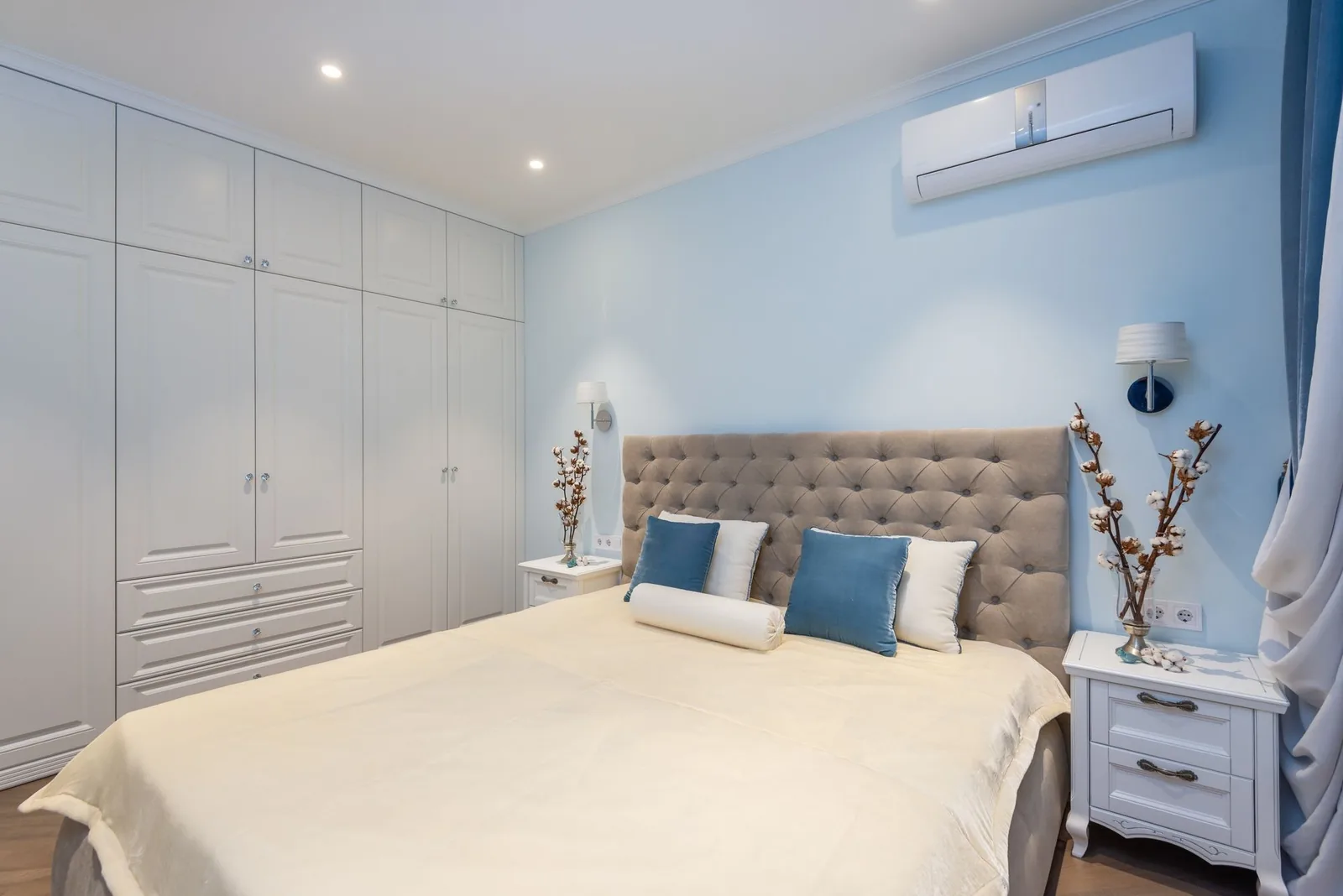
Brands We Don't Recommend for Large Bedrooms
- For contrast: Fujitsu Halcyon indoor units publish indoor sound levels down to 21–22 dB(A) on low fan settings in the 9–12k BTU range. Premium brands like Daikin Emura and Mitsubishi MSZ-FS reach 19–21 dB(A). A generic 12,000 BTU "budget mini split" with thin specs and no published dB ratings? You're taking a chance on noise.
Red Flags in Mini Split Marketing
-
Brands that never mention needed electrical specs, breaker sizes or line set length limits force you to guess - and guessing leads to problems.
-
Unauthorized online resale of premium brands can void manufacturer warranties. If you find a Mitsubishi or Daikin unit at a price that is too good to be true from a random online shop, verify the seller is an authorized dealer before you get excited about the deal.
When DIY Install Ruins a Good Brand
-
Even with pre-charged line sets, you still need proper torque, leak checks, correct electrical work and disconnects that meet code. You might not realize how much heavy lifting those tasks involve.
-
Many mini split and heat pump warranties quietly need installation by a licensed pro, meaning a DIY install can effectively turn a good brand into a "no-warranty" brand to avoid. Professional installation protects your warranty and ensures the system is working correctly from day one.
If you're set on DIY, choose brands with clear, DIY-friendly documentation and DIY warranty terms that are written out. And still consider having at least the refrigerant side checked by a pro. That one visit can be the difference between a system that lasts 15 years and one that fails in three.
What Makes a Mini Split Brand Worth Buying in 2026
-
Solid brands in 2026 share these features: variable speed inverter compressors standard, SEER2 ratings 18+, good low-temperature heating specs with clear HSPF2 values, and transparent documentation that doesn't hide behind marketing filler.
-
Look for brands that offer strong tech support, local parts availability and long-running product lines so today's unit can still get a compatible board or fan motor in 2030. Common issues with ductless mini split systems include lack of parts availability and technical support - you want a brand where that is not a concern.
Mini Splits vs. Central Air: Different Things to Avoid
-
For central air, indoor and outdoor equipment from different series or brands without AHRI pairing is a big "avoid," even with reputable logos on each part. A new system only gets its efficiency rating when the pieces are tested together.
-
The 2023 SEER2 regional rules for central AC apply based on install location, not sale location. In the Southeast and Southwest, a split AC under 45,000 Btu/h needs at least 14.3 SEER2. Some off-brand equipment skirts these details in marketing, which can leave you non-compliant.
-
Ductless mini splits used as spot cooling or heating are more forgiving on existing duct issues, but they still depend on correct sizing and refrigerant charge. An efficient unit that is badly charged is just an expensive room decoration.
Our Take on Mini Split Brands to Avoid in 2026
FAQ
Is there one worst mini split brand to avoid?
There is no one universally terrible brand. Instead, groups of risky products - no-name marketplace imports, often renamed labels and unsupported house brands - are more dangerous than any single logo. Even within a brand, some lines are solid while older or budget series may be worth skipping. Friedrich mini splits are known for poor customer service, and some users report frequent repairs with certain LG mini split models, but both brands also make competent equipment in their higher-end lines. Make decisions model-specific and based on specs, support and checked reviews rather than brand name alone.
Are DIY Mini Splits a Bad Idea?
DIY isn't automatically bad, but it cuts down your margin for error and can mess up warranties. It's better suited to experienced DIYers comfortable with electrical work, flare fittings and following detailed instructions - not someone whose main tool is enthusiasm. For primary heat, cold climate applications or multi-zone systems, we'd strongly favor professional installation, even on equipment sold as DIY. The cost of a pro install is almost always less than the cost of a warranty denial plus a compressor replacement.
What mini split brands are safest for a large bedroom?
We recommend established brands with very low indoor noise levels, good inverter control and solid filtration - Mitsubishi, Daikin, Fujitsu and premium lines from LG or Gree. Look for indoor noise specs listed below 25 dB(A) at the lowest setting and dedicated sleep modes. Avoid the cheapest marketplace brands that don't list detailed noise ratings or filters specs, even if the BTU rating looks correct for the room. Ceiling height, insulation and window area all affect sizing - a load calculation matters here too.
How can I quickly spot a mini split brand I should avoid?
Use this checklist: missing SEER2 and HSPF2 numbers, no AHRI listing, no heating capacity tables at low temperatures, no dB ratings and unclear or tiny-print warranties are all strong warnings. If a listing relies on flashy marketing phrases and "up to" claims without giving hard performance data, walk away. Also check whether the brand has a U.S.-based support line and whether any local HVAC company is willing to install and service it. If the answer to either is no, that tells you everything.
Replace Central Air With Mini Splits or a Heat Pump?
Mini splits are excellent when you need zoned comfort, have poor or missing existing ducts, or want to avoid 30%+ duct losses. Modern split heat pumps are great if your ducts are in good shape and you prefer a single thermostat for the whole house. Get quotes for both options that include model-specific SEER2, HSPF2 and AHRI ratings, then compare total installed cost and long-term efficiency rather than choosing based only on brand reputation. The right answer is going to depend on your home's layout, your climate zone and whether you actually need room-by-room control.