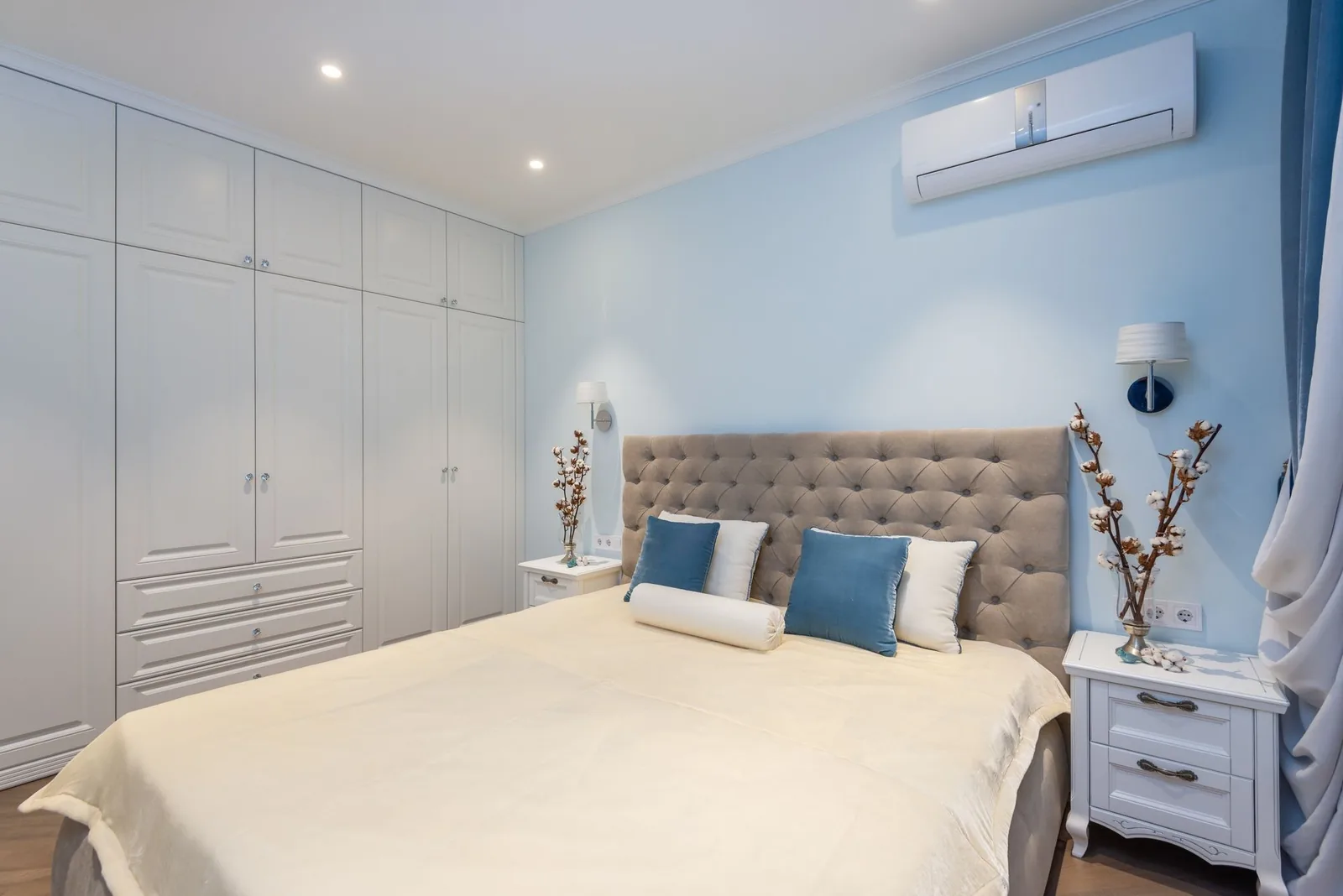
The Quietest Mini Split Brands in 2026
If you're doing a mini split brand noise comparison, the brand matters far more than most buyers realize. We've compared the major mini split systems sold in the U.S. from 2024 through 2026 - focusing on published dB(A) specs, independent measurements, and long-term owner reports - to rank which brands actually deliver quiet operation in real rooms, not just on spec sheets.
The short answer: Mitsubishi Electric and Fujitsu are at the front of the pack for whisper-quiet indoor units, and they routinely hit about 19–24 dB(A) on low fan speeds across their full ranges. Daikin is right behind, with some indoor heads reaching as low as 19 dB(A) in quiet mode and outdoor units that can dip into the mid-40s dB(A). LG can give you a good mix of low noise and smart home integration. Budget-friendly brands like MRCOOL, Pioneer and Senville are quiet enough on low settings but get a lot louder under real cooling loads, and their outdoor compressor units tend to sit 5–10+ dB above the premium tier. Some mini-split models can get noise levels as low as 20 dB, but the brand you choose determines whether that's the norm or the exception.
We're looking at brand families here - not cherry-picking one top specific model - and we are focusing on 9,000–18,000 Btu wall-mounted heat pump units. All picks meet or beat current U.S. efficiency minimums (split-system heat pumps made on or after January 1, 2023 must reach at least 14.3 SEER2 and 7.5 HSPF2), but this noise comparison is about what you'll actually hear, not efficiency levels. Below, you'll find decibel ranges, "best for" use cases, and clear "watch out" alerts for each mini split brand.
How Mini Split Noise Works, and Why Brand Matters
Noise levels are measured in decibels (dB), and most manufacturers publish sound pressure levels in dB(A) - a scale that reflects how the human ear hears sound - at a set distance, usually about 1 meter for indoor units and 3–5 feet for the outdoor unit. Both ratings matter: the noise from the indoor head determines whether you can sleep or hold a quiet conversation without distraction, while the noise from the outdoor unit affects neighbors, patios and bedrooms near the condenser. Mini-split indoor units operate at 25–35 dB across most brands, while top-tier mini-split indoor air handlers operate between 18 dBA and 25 dBA on the lowest fan settings. Outdoor units operate between 43 dB and 60 dB across major brands, and under full load, outdoor mini-split units usually run between 48 dBA and 59 dBA.
Here's why brand-level design choices create consistent noise patterns across a product line: compressor type, fan blade shape, cabinet insulation thickness and control logic (how smoothly an inverter ramps up and down) are all engineered at the platform level. A brand that puts money into sound dampening technology, multi-blade fans and refined inverter technology will produce quieter results across its entire range - not just in one showcase model. Decibels in sound measurement are on a log scale: every ~10 dB increase is heard as about twice as loud, so a 6–8 dB difference between brands is dramatic at night. Differences in dB levels less than 2 to 4 dB are virtually imperceptible to the human ear, but a difference of 3 dB represents a measurable change in sound energy. And while proper installation can reduce mini-split noise levels a lot, a noisy platform can't be "installed into silence."
Mini Split Brand Noise Comparison
| Brand | Indoor Noise (Low / High Fan) | Outdoor Noise (Rated Load) | Best For | Noise Caveat |
|---|---|---|---|---|
| Mitsubishi Electric | 19–24 dB / 35–42 dB | 47–53 dB | Ultra-quiet bedrooms, cold-climate whole-home | Higher installed cost per zone; turbo mode jumps noticeably |
| Fujitsu | 19–23 dB / 34–42 dB | 46–53 dB | Bedrooms, studios, four-season homes | Needs consistent filter cleaning to maintain low-noise advantage |
| Daikin | 19–24 dB / 35–43 dB | 45–52 dB | Multi-zone humid climates, quiet bedrooms | Multi-zone outdoor units ramp up audibly under full load |
| LG | 21–26 dB / 36–44 dB | 48–54 dB | Design-conscious condos, smart-home setups | Not every series is whisper-quiet; confirm model specs |
| MRCOOL | 18–25 dB / 38–46 dB | 52–58 dB | DIY installs, budget whole-home | Outdoor unit noticeably louder; DIY mounting can amplify sound |
| Pioneer | 25–28 dB / 40–48 dB | 55–60 dB | Garages, bonus rooms, budget cooling | Published specs often represent quiet mode only; cooling under load is louder |
| Senville | 23–28 dB / 38–46 dB | 54–57 dB | Non-sleep spaces, occasional-use rooms | Wide variance between product lines (AURA vs LETO) |
The pattern is clear: premium Japanese brands deliver consistently minimal noise across their lineups, both indoors and outdoors. DIY-leaning and budget ductless air conditioners are competitive on paper at lower fan speeds but skew meaningfully louder at the outdoor compressor and under real-world cooling demand.
How We Compared Mini Split Brand Noise
We built this noise comparison to be trustworthy, not pushy. Here's what we looked at:
-
Published manufacturer indoor and outdoor sound pressure specs in dB(A) for 9k–18k Btu wall-mounted units, checked against AHRI certified data where available.
-
Independent lab tests and third-party measurements from sites like QuietSpecs and SplitAtlas, which can even out test conditions.
We evened out for fan speed where possible - comparing low vs. nominal vs. high - and highlighted gaps of 5+ dB between brands, since anything under ~3 dB is usually not perceptible in a furnished room. We left out oddball server-room or industrial VRF units and focused strictly on typical residential ductless mini split systems for 100–600 sq ft zones. Independently verified sound levels are important for accurate comparisons across brands, because manufacturer specifications are useful for comparing noise levels among models only when the measurement conditions match.
Decisive Factor #1: Indoor Unit Noise by Brand (Bedrooms vs Living Spaces)
Whisper tier (19–23 dB on quiet/low): Mitsubishi Electric's premium wall heads - including the AP and M-Series lines - consistently hit ~19–24 dB(A) on low for 9k–12k capacity units. Fujitsu's Altair and "Quiet"-labeled wall heads match this, with some 9k models reaching 19 dB(A) in their lowest mode. Daikin's Entra and Atmosphera wall mounts publish indoor sound pressure as low as 19 dB(A) in quiet mode. Some GREE models operate as quietly as 20 dB indoors, placing them in this tier as well. At these levels, you're below a quiet library - about the threshold of a gentle breeze.
Acceptably quiet (23–28 dB): Most Daikin mid-tier lines, Fujitsu standard series and LG non-top models fall here. These are fine for most bedrooms and home offices - you may hear a soft whoosh, but it blends into ambient indoor air noise. Sound levels below 30 dB are considered very quiet, and everything in this band qualifies.
Noticeably present (28–33+ dB): Many Pioneer, Senville LETO and some MRCOOL units land here on similar low-fan settings. Senville's LETO line, for example, shows around 28 dB(A) indoors at low for a 12k unit, while Pioneer Diamante heads sit around 22–26 dB in the best case but climb into the upper 20s for standard lines. At 30+ dB, light sleepers will notice.
Tonal differences by brand also affect perceived noise. Premium brands like Mitsubishi and Fujitsu tend to produce a smooth, even airflow sound, while value-tier units more often exhibit harsher fan whine, coil valve clicks or sudden speed changes that draw attention even at similar dB levels. You might see on Reddit's heat pump forums that owners frequently cite these transient noises as more annoying than continuous hum.
Winner: Mitsubishi Electric and Fujitsu for ultra-quiet bedroom use. Daikin is a near-match. The trade-off is clear: these brands cost more per zone (often 15–30% above value-tier alternatives), and professional installation adds to the bill. But if indoor noise performance in your living space is non-negotiable, the premium is justified. So which brands are the most consistent across their full ranges? All manufacturers offer models capable of very quiet operation, but these brands do it most consistently across their full ranges.
Decisive Factor #2: Outdoor Unit Noise and Neighbor Friendliness
Premium outdoor units from Daikin can reach as low as 45 dB(A) in quiet cooling mode for smaller single-zone condensers. Daikin outdoor units can operate as low as 56 dB in standard rated conditions for larger units. Mitsubishi's Hyper-Heat and standard outdoor units for 12k–18k capacity usually land in the 47–53 dB(A) range at rated cooling load. Fujitsu's outdoor condensers sit similarly, often 46–53 dB(A) depending on capacity.
Budget brands tell a different story. MRCOOL's outdoor units usually land around 52–58 dB(A) for 12k–24k capacity. Pioneer outdoor noise levels sit in the mid-to-upper 50s, sometimes exceeding 60 dB(A) for larger units. Senville outdoor units similarly stay in the 54–57 dB(A) range. Remember: a 10 dB difference means the budget outdoor unit sounds about twice as loud as the premium one.
Cold-climate or "low-ambient" heat pump systems deserve special attention. During defrost cycles - when the outdoor unit reverses its refrigerant flow to melt ice from the coil - even premium brands get louder. Reversing valves click, fans speed up and ice dropping off coils creates noise that comes and goes. Premium units tend to soften these events better. Cheaper ones may make defrost cycles very audible and harsh. This matters in heating mode during winter nights.
For DIY-friendly brands like MRCOOL, outdoor placement becomes especially critical. Because diy installation can introduce extra vibration if mounting isn't done carefully - and because these units start louder to begin with - every foot of distance from bedroom windows and property lines counts. Vibration-isolating pads can minimize noise transmission from outdoor units, but they can't compensate for a louder compressor at its core.
Winner: Daikin and Mitsubishi for tight-lot homes and patios. Their outdoor units can stay in the mid-to-high 40s dB(A) in many configurations - quiet enough that neighbors may not notice. Value-tier brands are perfectly fine if you can place the outdoor unit 15+ feet from sleeping areas and property lines.
Decisive Factor #3: Noise Control Features by Brand (Quiet Modes, Inverters and Controls)
Quiet / night modes: Nearly every brand now offers a "quiet," "night," "SL," or "mute" mode. But the real question is how much capacity they give up and how smoothly they engage. Mitsubishi's quiet modes gently reduce fan speed with little heating capacity or cooling capacity loss in moderate conditions. Daikin and Fujitsu handle this similarly well. Budget brands' quiet modes often reduce capacity more aggressively - meaning the unit may need to exit quiet mode sooner to keep up with demand, resulting in more frequent noise spikes. The noise of operation can change based on fan speed settings, and fan speed settings impact operating noise levels a lot.
Inverter ramp-up behavior: All reputable brands now use inverter-driven compressors, and inverter-driven systems can operate at low decibel levels, enhancing quiet performance. But premium brands tune them for smoother variable speed operation at part-load. Mitsubishi and Daikin ramp gradually from low to high, producing a gentle increase that's barely noticeable. Some value-tier units jump more abruptly - you might hear a sudden "whoosh" when the system shifts from low to medium, which is more disruptive than the absolute dB number suggests. This inverter technology difference is one of the biggest real-world noise separators between brands.
Smart controls and app scheduling: LG stands out here with native smart home integration via ThinQ, allowing you to schedule quiet mode at night or during meetings directly from your phone. Mitsubishi's kumo cloud and Daikin's One+ offer similar smart features, though with varying level of polish. Pioneer, Senville and MRCOOL offer basic remote control and some Wi-Fi capability, but app-based noise scheduling is less refined. The ability to automatically enter low-noise modes at specific times - without babysitting the remote - is a quality-of-life feature.
Physical sound insulation: Premium brands put money into compressor blankets, multi-blade fan designs, vibration-isolated internal mounts and thicker cabinet panels. These are technology decisions made at the brand level that show up across the entire lineup. Budget brands often use thinner metal panels, fewer internal dampeners and simpler fan blade shape - all of which pass vibrations more readily and can amplify sound, especially as the unit ages.
Winner: Mitsubishi and Daikin for the most practical, user-friendly noise controls. LG wins a special mention for the best smart-home noise scheduling. The benefit: truly silent nights without manually adjusting the unit every evening. Fujitsu deserves credit too for its well-labeled "Quiet" modes that deliver on their name. Budget brands can reduce noise via basic quiet modes, but the experience is less consistent.
Decisive Factor #4: Brand Reliability, Maintenance and How Noise Changes Over Time
Long-term quiet track records: Mitsubishi, Daikin and Fujitsu - brands known for quiet mini-split systems - have the strongest reputations for maintaining noise performance over 5–10+ years. Their higher-quality fan motors, thicker casing and better-insulated outdoor cabinets resist the vibration-related degradation that causes rattles and buzzing over time. Warranty depth supports this: premium lines often have 7-year or longer compressor warranties with better parts quality behind them.
Filter design and maintenance: Dirty or clogged air filters increase operational noise in mini-split systems - when filters are clogged, the fan has to work harder (and louder) to maintain airflow. Premium brands generally design filters for easier access and more effective cleaning. Budget units sometimes use thinner fins or tighter coil bends that accumulate debris faster, pushing fan speed up sooner. To keep your system quieter over the long term, schedule annual tune-ups and clean filters monthly during heavy-use seasons. Dirty filters are one of the most common - and most fixable - causes of rising indoor noise.
Known brand quirks: Some MRCOOL owners report developing vibration or panel rattles within the first few years, especially when diy installation wasn't done with proper vibration pads and leveling. MRCOOL's Trustpilot profile stood at 3.2 out of 5 across 89 reviews in September 2026, split 45% five-star and 47% one-star - a split distribution that suggests installation quality largely determines the ownership experience, including noise. Senville and Pioneer units sometimes develop coil buzz or louver rattle as components loosen, and their thinner metal cabinets are more prone to resonance.
Professional installation keeps any brand quieter over its lifespan. Proper line-set support, vibration isolation, code-compliant electrical work and level mounting prevent the gradual loosening and misalignment that create noise over time. Installation quality is the single biggest variable you can control, regardless of brand.
Winner: Mitsubishi and Daikin for the most consistently quiet operation over time. Fujitsu is close behind. The premium pricing trade-off is real - but it buys components that resist noise degradation year after year. Budget brands may deliver acceptable noise initially, but are more likely to develop annoying sounds by year 5–7 if maintenance isn't rigorous.
Brand-by-Brand Noise Snapshots
Mitsubishi Electric Quiet Standard for Cold Climates
-
Indoor heads usually run 19–24 dB(A) on low for 9k–12k capacity. Outdoor condensers in rated cooling often land in the high 40s to low 50s dB(A). So what are Mitsubishi mini-splits known for? Mitsubishi mini-splits are known for their quiet operation.
-
Exceptionally quiet at part-load thanks to well-developed inverter control and smooth ramp behavior. Strong noise performance in heating mode, including cold-climate Hyper-Heat models.
Daikin Is Quiet Indoors and Strong for Multi-Zone and Humid Climates
-
Indoor quiet modes are as low as 19 dB(A). Outdoor units can hit the mid-40s dB(A) for smaller single-zone condensers. Multi-zone outdoor units are louder when they're under full load.
-
Stable noise even under high humidity load thanks to effective coil and fan design. Strong choice where dehumidification, energy efficiency and zoning matter.
Fujitsu Whisper-Quiet Indoors with Proven Cold-Climate Reliability
-
Indoor quiet modes often reach 19 dB(A) on Altair and "Q"-labeled models. Standard low modes for 9–12k units sit in the low 20s. Outdoor units are in the 46–53 dB(A) range.
-
You might notice that owners frequently report a smoother sound quality - less harsh fan whine compared to similarly priced competitors. Strong in ductless heating for four-season climates.
LG Quiet, Stylish and Smart-Home Friendly
-
Indoor sound profile: often low-20s dB(A) on quiet modes, with wall cassettes that look good and blend into open-plan living spaces.
-
Native smart home integration (ThinQ app) makes it easy to schedule quiet mode at night or during meetings - a noise-management advantage with smart features built in.
MRCOOL Is DIY-Friendly, But Watch Noise and Install Quality
-
Indoor noise on the 5th Gen DIY 12k is competitive at the low end (~18–22 dB(A) in "Si" mode), but high fan speeds and larger capacities get a lot louder (38–46 dB). Outdoor units usually land at 52–58 dB(A).
-
DIY installation can lead to extra vibration or line-set noise if mounting, isolation and leveling aren't done carefully. Installation costs are lower, but noise risk is higher.
-
Watch out: Mixed owner feedback - MRCOOL's Trustpilot profile stood at 3.2 out of 5 across 89 reviews in September 2026, split 45% five-star and 47% one-star - suggests that installation quality largely determines whether these units stay quiet or become annoying over time. You should treat vibration pads and level mounts as mandatory, not optional.
Pioneer, Senville and Other Budget Brands with Louder Edges
-
Shared noise pattern: indoor heads that are fine on low-to-medium (mid-20s dB) but loud on high fan (40+ dB), and outdoor units that sit in the low-to-mid 50s dB(A). Pioneer Diamante models are a little quieter than standard Pioneer lines.
-
Senville shows wide variance: the AURA line can approach ~19–23 dB(A) on quiet settings for some models, while the LETO line sits around 28 dB(A) on low for a 12k unit. This gap makes model-level research essential.
Mini Split Brand Noise by Use Case: Who Should Choose What?
Here's how all the analysis translates into concrete recommendations by room type:
How to Read Noise Specs So Brands Can't Mislead You
Manufacturers put out their best-case numbers - minimum fan speed, ideal lab conditions, sometimes in chambers without echo that don't exist in any real home. So how do you cut through the noise (literally)? Here's how to cut through the noise (literally):
- Check whether noise ratings were measured at 1 meter (~3.3 ft) or another distance. Different test distances change the numbers a lot. QuietSpecs notes that only Fujitsu has clearly stated their chamber-without-echo testing approach.
Do Higher-Efficiency Mini Splits Run Quieter by Brand?
Split-system heat pumps made on or after January 1, 2023 must reach at least 14.3 SEER2 and 7.5 HSPF2. Most quality mini splits exceed these floors a lot. ENERGY STAR Version 6.2 certifies split heat pumps at 15.2 SEER2, 11.0 EER2, and 7.8 HSPF2 or better. Brands aiming for these higher ENERGY STAR levels - Mitsubishi, Daikin, Fujitsu, LG - usually pair that efficiency with better compressors and fans that are also quieter at part-load. Higher-efficiency inverter-driven units spend more of their runtime at lower speeds, which directly translates to lower actual noise levels during typical operation.
Mid- and value-tier brands technically meet code but may run closer to full capacity more often - especially in extreme heat or cold - which raises average noise throughout the day. A mini split brand that hits 20+ SEER2 usually does so because its inverter can turn down to very low output, which means quieter, more efficient cooling and heating by nature.
Mini Split Brand Noise vs Central Air and Other Cooling Options
Here's how the categories compare:
- Central AC outdoor condensers vs mini split outdoor units: Traditional split central AC condensers often produce 55–75 dB depending on age and efficiency, while even budget mini split outdoor units top out around 58–60 dB.
Frequently Asked Questions About Mini Split Brand Noise
Are DIY Mini Split Brands Louder Than Pro-Only Brands?
On paper, some DIY brands' lowest specs can be competitive - MRCOOL's 12k DIY 5th Gen claims ~18 dB(A) in "Si" mode. But diy installation often brings in extra vibration and airflow noise from imperfect mounting, poorly supported line-sets and inadequate isolation that can make sound louder. Careful DIYers who use vibration pads, ensure level mounts and follow local building codes can keep noise in check. But if you're not confident in your installation quality, lean toward a pro-installed premium brand - the combination of a better platform and expert mounting delivers lower actual noise levels that you can really hear.